Sunday, August 31, 2025

Spies, Wreckers and Unmasked Celebrities

 [I wrote this in 2018 but it remained unpublished until now. I've added analysis and links for those mentioned to update their activities. Louis CK and Garrison Keillor are still performing, and Kevin Spacey is involved in a new sci-fi movie. Tavis Smiley has a syndicated radio interview show. Harvey Weinstein faces a retrial over rape allegations. Matt Lauer keeps a low profile but thinks he can make a comeback. Al Franken is back in the Senate, or, rather, he plays a senator on the Netflix streaming series The Residence. Three women are chasing Russell Simmons for $8 million in settlement funds. Tavis Smiley interviews people on his syndicated radio show. Journalist Ronan Farrow, who spurred the #MeToo movement with his articles about Weinstein and other high-profile men, continues to serve as a contributing writer for The New Yorker.}

For months I've tinkered with ideas comparing this fall's wave of #MeToo accusations against men of sexual assault with the show trials and purges of leaders of the Communist Party in 1936-1938 in the Soviet Union.

At first, I read the coerced confessions of men like Nikolai Rykov and Nikolai Bukharin with the statements of Harvey Weinstein, Matt Lauer and Kevin Spacey. I lined up excerpts and looked for a common thread:

Bukharin stated: "I have merited the most severe punishment, and I agree with Citizen the Procurator, who several times repeated that I stand on the threshold of my hour of death."

Weinstein stated: "I came of age in the 60’s and 70’s, when all the rules about behavior and workplaces were different. That was the culture then. I have since learned it’s not an excuse, in the office - or out of it. To anyone. I realized some time ago that I needed to be a better person and my interactions with the people I work with have changed. I appreciate the way I’ve behaved with colleagues in the past has caused a lot of pain, and I sincerely apologize for it."

That approach didn't work, since Rykov and Bukharin had been tortured and their families threatened and their testimony had been written for them. They knew that in all likelihood they would be executed (spoiler alert: they were). Weinstein, Lauer and Spacey face career disruptions, if not ruin, and some awkward moments when they lunch at Spago in Hollywood. The comparison felt forced and unfair to the horrors experienced by the millions executed or imprisoned by Joseph Stalin in his purge mania.

A new line of investigation became visible when I read an article in the New York Post with the intriguing headline, "Academy members now regret banning Weinstein so hastily."

The article sketched the challenges faced by the Academy of Motion Picture Arts and Sciences after the swift boot given to member Harvey Weinstein after his sordid record finally became widely known thanks to articles in The New York Times and The New Yorker. One quote:

“[We] can’t regret [kicking out Harvey] because [we] didn’t really have a choice,” said one male member of AMPAS’ board of governors. “Some members were quite vehement. But [we] didn’t have time to really weigh out the repercussions.”

The Academy is wrestling how to treat other members accused of sexual assaults, including Oscar winner Casey Affleck. The phrase "slippery slope" even arises.

My attention drifted back 80 years to the show trials and purges of the USSR. The purges in the 1930s started gradually, then picked up speed as denunciations and kill lists multiplied. The secret police, the NKVD, had quotas they had to meet. The executioners were themselves executed, and then those that came after them were executed. Stalin finally slowed the process and ended the trials. He died in 1953 and Nikita Khrushchev became the boss.

How do these particular cases connect to Stalin's USSR? That's not so much through the punishments (torture and execution vs. social ostracism and canceled shows) or the veracity of the charges (total fabrications in the USSR vs. highly probably in the USA), but through the demands or willingness for public confession. The USSR's justice system depended on confessions; the men in these #MeToo cases readily unmasked themselves, although that contrition, real or simply for PR purposes, didn't protect their careers.

Let's look at what the men said, in their own words. 

Spies and wreckers

Imagine living in Moscow in the late 1930s. You skim a fresh copy of Pravda at your factory canteen and emit a low whistle at the sensational news from the latest show trial. Look at all the former loyal Party members exposed at rotten spies and wreckers, Trotskyites in the pay of the British Secret Service since 1918 intent on bringing down the first socialist state! They all confessed and almost all are sentenced to death. You finish reading, close the paper, get back to work and pray the NKVD squads don’t come for you that night.

The American public has glimpsed a tiny, scintillating part of the show-trial process this fall with the unmasking of sexual predators, starting in spectacular fashion in October when the New York Times and then The New Yorker unmasked film executive Harvey Weinstein. Knowing what was rushing at him, Weinstein called on his friends and flunkies to stop the articles, but the facts finally landed like a bunker buster on his secret lair. He fell hard and fast, in good Soviet style, losing his company, his memberships in industry academies and, possibly, his freedom, depending on how investigations proceed.

As the unmaskings (a word favored in the Soviet press of the day) grind on, swallowing targets across entertainment, politics, media and business, I’m intrigued by the theme of confessions. Confessions were essential to the show trial productions, with defendants beaten, threatened, humiliated and coached into saying exactly what Joseph Stalin wanted, prior to the preordained guilty verdicts and executions. Early victims were told they (and, most important, their families) would survive if they confessed to whatever Stalin concocted for them, and they were desperate enough to agree. That didn't save them.

While reflecting different times and pressures (Harvey Weinstein isn’t getting a bullet in the back of his head), the confessions of 1937-38 and 2017-18 bear comparison.

Two fought back, one directly and another obliquely. Nikolai Krestinsky, diplomat and former Soviet ambassador to Germany, jammed the prosecutorial works in 1938 with his court statement: “I do not recognize that I am guilty. I am not a Trotskyite. I was never a member of the 'right-winger and Trotskyite bloc,' which I did not know to exist. Nor have I committed a single one of the crimes imputed to me, personally; and in particular I am not guilty of having maintained relations with the German Secret Service.” He recanted the next day, after more torture.

Nikolai Bukharin, on trial with Krestinsky, took a dual approach, admitting full guilt to preposterous charges but arguing against details:

In Court I admitted and still admit my guilt in respect to the crimes which I committed and of which I was accused by Citizen the State Prosecutor at the end of the Court investigation and on the basis of the materials of the investigation in the possession of the Procurator. I declared also in Court, and I stress and repeat it now, that I regard myself politically responsible for the sum total of the crimes committed by the ”bloc of Rights and Trotskyites.”

I have merited the most severe punishment, and I agree with Citizen the Procurator, who several times repeated that I stand on the threshold of my hour of death.

Nevertheless, I consider that I have the right to refute certain charges which were brought: a) in the printed Indictment, b) during the Court investigation, and c) in the speech for the prosecution made by Citizen the Procurator of the U.S.S.R.

Both confessions are notable, Krestinsky for boldness and Bukharin for an effort to both admit and refute.

In the 2017 confessions, we see a literary genre emerging that for the most part covers common themes: contrition, shock at their behavior, robust career-long support for women, determination to get to the bottom of their aberrant actions and, in some cases, defiance

Harvey Weinstein’s October 5 statement said in full:

I came of age in the 60’s and 70’s, when all the rules about behavior and workplaces were different. That was the culture then.

I have since learned it’s not an excuse, in the office--or out of it. To anyone.

I realized some time ago that I needed to be a better person and my interactions with the people I work with have changed.

I appreciate the way I’ve behaved with colleagues in the past has caused a lot of pain, and I sincerely apologize for it.

Though I’m trying to do better, I know I have a long way to go. That is my commitment. My journey now will be to learn about myself and conquer my demons. Over the last year I've asked Lisa Bloom to tutor me and she's put together a team of people. I've brought on therapists and I plan to take a leave of absence from my company and to deal with this issue head on. I so respect all women and regret what happened. I hope that my actions will speak louder than words and that one day we will all be able to earn their trust and sit down together with Lisa to learn more. Jay Z wrote in 4:44 "I'm not the man I thought I was and I better be that man for my children." The same is true for me. I want a second chance in the community but I know I've got work to do to earn it. I have goals that are now priorities. Trust me, this isn't an overnight process. I've been trying to do this for 10 years and this is a wake-up call. I cannot be more remorseful about the people I hurt and I plan to do right by all of them.

I am going to need a place to channel that anger so I've decided that I'm going to give the NRA my full attention. I hope Wayne LaPierre will enjoy his retirement party. I'm going to do it at the same place I had my Bar Mitzvah. I'm making a movie about our President, perhaps we can make it a joint retirement party. One year ago, I began organizing a $5 million foundation to give scholarships to women directors at USC. While this might seem coincidental, it has been in the works for a year. It will be named after my mom and I won't disappoint her.

Meanwhile, Kevin Spacey tweeted:

I have a lot of respect and admiration for Anthony Rapp as an actor. I'm beyond horrified to hear his story. I honestly do not remember the encounter, it would have been over 30 years ago. But if I did behave as he describes, I owe him the sincerest apology for what would have been deeply inappropriate drunken behavior, and I am sorry for the feelings he describes having carried with him all these years.

"This story has encouraged me to address other things about my life. I know that there are stories out there about me and that some have been fuelled by the fact that I have been so protective of my privacy. As those closest to me know, in my life I have had relationships with both men and women. I have loved and had romantic encounters with men throughout my life, and I choose now to live as a gay man. I want to deal with this honestly and openly and that starts with examining my own behavior.

Charlie Rose said this in a statement to the Washington Post:

In my 45 years in journalism, I have prided myself on being an advocate for the careers of the women with whom I have worked. Nevertheless, in the past few days, claims have been made about my behavior toward some former female colleagues. It is essential that these women know I hear them and that I deeply apologize for my inappropriate behavior,” he continued. “I am greatly embarrassed. I have behaved insensitively at times, and I accept responsibility for that, though I do not believe that all of these allegations are accurate. I always felt that I was pursuing shared feelings, even though I now realize I was mistaken. I have learned a great deal as a result of these events, and I hope others will too. All of us, including me, are coming to a newer and deeper recognition of the pain caused by conduct in the past, and have come to a profound new respect for women and their lives.

And Matt Lauer:

There are no words to express my sorrow and regret for the pain I have caused others by words and actions. To the people I have hurt, I am truly sorry. As I am writing this I realize the depth of the damage and disappointment I have left behind at home and at NBC.  Some of what is being said about me is untrue or mischaracterized, but there is enough truth in these stories to make me feel embarrassed and ashamed. I regret that my shame is now shared by the people I cherish dearly. Repairing the damage will take a lot of time and soul searching and I'm committed to beginning that effort. It is now my full time job. The last two days have forced me to take a very hard look at my own troubling flaws. It's been humbling. I am blessed to be surrounded by the people I love. I thank them for their patience and grace.

Louis C.K.:

I want to address the stories told to the New York Times by five women named Abby, Rebecca, Dana, Julia who felt able to name themselves and one who did not.

These stories are true. At the time, I said to myself that what I did was okay because I never showed a woman my dick without asking first, which is also true. But what I learned later in life, too late, is that when you have power over another person, asking them to look at your dick isn’t a question. It’s a predicament for them. The power I had over these women is that they admired me. And I wielded that power irresponsibly.

I have been remorseful of my actions. And I’ve tried to learn from them. And run from them. Now I’m aware of the extent of the impact of my actions. I learned yesterday the extent to which I left these women who admired me feeling badly about themselves and cautious around other men who would never have put them in that position.

I also took advantage of the fact that I was widely admired in my and their community, which disabled them from sharing their story and brought hardship to them when they tried because people who look up to me didn’t want to hear it. I didn’t think that I was doing any of that because my position allowed me not to think about it.

There is nothing about this that I forgive myself for. And I have to reconcile it with who I am. Which is nothing compared to the task I left them with.

I wish I had reacted to their admiration of me by being a good example to them as a man and given them some guidance as a comedian, including because I admired their work.

The hardest regret to live with is what you’ve done to hurt someone else. And I can hardly wrap my head around the scope of hurt I brought on them. I’d be remiss to exclude the hurt that I’ve brought on people who I work with and have worked with who’s professional and personal lives have been impacted by all of this, including projects currently in production: the cast and crew of Better Things, Baskets, The Cops, One Mississippi, and I Love You Daddy. I deeply regret that this has brought negative attention to my manager Dave Becky who only tried to mediate a situation that I caused. I’ve brought anguish and hardship to the people at FX who have given me so much The Orchard who took a chance on my movie. and every other entity that has bet on me through the years.

I’ve brought pain to my family, my friends, my children and their mother.

I have spent my long and lucky career talking and saying anything I want. I will now step back and take a long time to listen.

Thank you for reading.

Garrison Keillor on his website:

I am deeply grateful for all the years I had doing ‘A Prairie Home Companion’ and ‘The Writer’s Almanac,’ the summer tours, the outdoor shows at Tanglewood and Wolf Trap, the friendships of musicians and actors, the saga of Lake Wobegon, the songs and sketches, Guy Noir, Dusty & Lefty, the sheer pleasure of standing in the warmth of that audience. A person could not hope for more than what I was given. I’ve been fired over a story that I think is more interesting and more complicated than the version MPR heard. Most stories are. It’s some sort of poetic irony to be knocked off the air by a story, having told so many of them myself, but I’m 75 and don’t have any interest in arguing about this. And I cannot in conscience bring danger to a great organization I’ve worked hard for since 1969. I am sorry for all the poets whose work I won’t be reading on the radio and sorry for the people who will lose work on account of this. But my profound feeling is that of gratitude, especially to my wife Jenny, and for this painful experience that has brought us even closer together.

Al Franken:

The first thing I want to do is apologize: to Leeann, to everyone else who was part of that tour, to everyone who has worked for me, to everyone I represent, and to everyone who counts on me to be an ally and supporter and champion of women. There's more I want to say, but the first and most important thing—and if it's the only thing you care to hear, that's fine—is: I'm sorry.

"I respect women. I don't respect men who don't. And the fact that my own actions have given people a good reason to doubt that makes me feel ashamed.

"But I want to say something else, too. Over the last few months, all of us—including and especially men who respect women—have been forced to take a good, hard look at our own actions and think (perhaps, shamefully, for the first time) about how those actions have affected women.

"For instance, that picture. I don't know what was in my head when I took that picture, and it doesn't matter. There's no excuse. I look at it now and I feel disgusted with myself. It isn't funny. It's completely inappropriate. It's obvious how Leeann would feel violated by that picture. And, what's more, I can see how millions of other women would feel violated by it—women who have had similar experiences in their own lives, women who fear having those experiences, women who look up to me, women who have counted on me.

"Coming from the world of comedy, I've told and written a lot of jokes that I once thought were funny but later came to realize were just plain offensive. But the intentions behind my actions aren't the point at all. It's the impact these jokes had on others that matters. And I'm sorry it's taken me so long to come to terms with that.

"While I don't remember the rehearsal for the skit as Leeann does, I understand why we need to listen to and believe women's experiences.

"I am asking that an ethics investigation be undertaken, and I will gladly cooperate.

"And the truth is, what people think of me in light of this is far less important than what people think of women who continue to come forward to tell their stories. They deserve to be heard, and believed. And they deserve to know that I am their ally and supporter. I have let them down and am committed to making it up to them."

Russell Simmons:

I vehemently deny all these allegations. These horrific accusations have shocked me to my core and all of my relations have been consensual.

I am blessed to have shared extraordinary relationships, whether through work or love, with many great women; and I have enormous respect for the women’s movement worldwide and their struggle for respect, dignity, equality and power. I am devastated by any reason I may have given to anyone to say or think of me in the ways that are currently being described. In recent weeks, some former business, creative and romantic partners have aired grievances as claims I categorically reject. In some of these instances, financial motives and direct contradictory witness testimony has been supplied to the media, which has been completely left out of stories. In the last few days, one woman attempted to extort me for $500,000 only to recant her ridiculous claim. The current allegations sent to me by The New York Times range from the patently untrue to the frivolous and hurtful. The presumption of innocent until proven guilty must not be replaced by “Guilty by Accusation.”

I have already apologized for the instances of thoughtlessness in my consensual relations. I have separated myself from my businesses and charities in order to not become a distraction. I have re-dedicated myself to spiritual learning, healing and working on behalf of the communities to which I have devoted my life. I have accepted that I can and should get dirt on my sleeves if it means witnessing the birth of a new consciousness about women. What I will not accept is responsibility for what I have not done. I have conducted my life with a message of peace and love. Although I have been candid about how I have lived in books and interviews detailing my flaws, I will relentlessly fight against any untruthful character assassination that paints me as a man of violence.

Tavis Smiley:

“I have the utmost respect for women and celebrate the courage of those who have come forth to tell their truth. To be clear, I have never groped, coerced, or exposed myself inappropriately to any workplace colleague in my entire broadcast career, covering 6 networks over 30 years.”

Then on GMA:

“I want to make sure we don’t lose all sense of nuance and proportionality in this conversation because if we do, people end up being guilty simply by accusation,” he said. “I’m not an angry black man and this notion of a hostile environment just doesn’t fit.”

Smiley was harshly critical of PBS’ actions. He maintained he was never informed that PBS had brought in an outside law firm to investigation what the network has called “multiple” and “credible” allegations of harassment. Smiley said he met with PBS executives and lawyers for three hours but was never informed of specific allegations. He said that meeting was scheduled “only under the threat of a lawsuit.”

Smiley was also critical of the fact that news of his suspension from PBS broke on Dec. 13 in Variety just minutes after the conclusion of that meeting.

“I’m human. I’m not perfect but this doesn’t rise to the level” of sexual misconduct, Smiley said of his past relationships. “PBS made a huge mistake here and they need to fix it.”

PBS released a statement through a spokesman following Smiley’s interview, which stated in no uncertain terms that the broadcaster continues to back its actions.

“Tavis Smiley needs to get his story straight,” the statement begins. It goes on to highlight Smiley’s difficulty in the “GDA” interview remembering the exact number of current employees with whom he has had sexual relationships.

“This contradicts his Facebook post from last week, where he cited only one previous relationship with an employee. Mr. Smiley even told viewers ‘I don’t know where your heart’s going to lead you.’ PBS is certain that it should not lead to multiple sexual relationships between the owner of a company and subordinates over many years particularly where employment decisions may be linked to sex.”

The statement also slammed Smiley for claiming he applauds women who have come forward with despite his company requiring current and former employees to sign non-disclosure agreements, and added that PBS “stands by its decision to respect the anonymity of those who are afraid to come forward publicly.”

“Mr. Smiley’s own words today coupled with the information discovered during the investigation confirms PBS’ decision to indefinitely suspend the distribution of  ‘Tavis Smiley.’”

Walmart has backed away from its sponsorship of Smiley’s programs while PBS’ investigation is ongoing. Walmart and Mills Entertainment have also dropped out of plans to back a 40-city live tour “Death of a King: A Live Theatrical Experience,” based on Smiley’s 2014 book of the same name about Martin Luther King Jr.


Friday, July 25, 2025

The Law of Spontaneous Conversations, Massachusetts Edition

There’s something about me that draws people who want to talk. They can’t wait to tell me their obsessions and life stories. Whether I respond doesn’t matter so much as that I hear them. They don’t realize that, even though I may look like a bald Jewish therapist with a beard—I’m not. But they see me that way.

These encounters typically happen on public transit or places where I can’t easily get away. The topics range from scary to engaging. I once had an elderly woman grab my arm and say, “Help me across the street.” So I did. That charmed me. And I like to help tourists who I can tell are befuddled with a subway map.

Usually I’ll listen because the world is full of lonely people, and if somebody wants to connect for 30 minutes on the train, I’m up for that. You never know where a chat will go, Sometimes we even exchange business cards.

But the conversations can turn ominous. When I lived in a New York suburb and commuted, I once sat across from a man who exuded tension and repressed anger. His mutterings about the 2008 recession and the source of problems in suburban schools signaled that.

I declined to engage and he said in an aggrieved tone, “Well, I see you just want to read your book.” He’d be quiet for a station or two and then he’d start again. I didn’t answer anything about who I was, where I lived, what I do for a living. My great fear was we’d both get off at the same station and then our cars would be parked side by side, and he’d harangue me all the way to the parking lot.

Then there was the time I was on a tour bus in Israel, again reading, when a man across the aisle asks me what time it was, an obvious opening gambit. I told him and he was off and running. He was from Australia, and now was visiting Israel. He ranted about the sign of the beast and the Apocalypse. And I thought, “Whooah, warning, warning.”

Then he asked, “So, sir, what religion are you?”

I wasn’t gonna go there. I told him, “I don’t want to talk about my religion, and I’m going to get back to reading my book.” So that was that.

Sometimes, however, a conversation catches my attention. I’m empathetic and I’ll think, let’s see what connects. You talk to me, I’ll talk to you. My favorites? When men (always men) notice the camera I often carry with me, my trusty Sony A5000, and ask me about it. Bingo! Because I love to talk about cameras and creativity.

Now, I moved to Reading from Katonah, New York, in April. I have noticed how friendly and chatty people in Massachusetts are. Really! From the first minutes after I arrived, as I was unpacking, I was able to talk to my neighbors. They have plenty of time and good guidance on living here. At a condo shareholders meeting, I was charmed to hear three of them chat about their families and number of grandchildren. One invited my partner Naomi and me to see her apartment, which we did.

People here will strike up a conversation; on the street, in a parking lot. Maybe right here tonight! For example, we were in Marblehead a few weeks ago for the art festival. A woman sidled up to us to talk about the weather and the festival. She mentioned she spends part of the year living in Morocco. My flashed, “Alert, alert, she wants to talk about Morocco.” As we wandered Marblehead, I asked for details and she happily provided them.

My favorite story so far happened a few Saturday evenings ago. I was approaching my apartment building and saw a woman get out of her car and head toward the entrance. She tried to open the door but couldn’t.

“I can get you in,” I said.

“I’m looking for the restaurant,” she replied.

“Oh, Post 1917, that’s around the corner. It’s easier for me to walk you there than give you directions.”

In her late 40s or early 50s, she was dressed for a festive social occasion. As we walked over, she put her arm through mine and exclaimed, “Aren’t you the gentleman!”

“I’m happy to help, it’s a little hard to find.”

I opened the door and escorted her inside. Before I could leave, she asked, “Can I get you a drink?”

I didn’t see that coming. With a sheepish smile I politely declined and wished her a great evening. Whatever she had planned, I'm sure she had a memorable Saturday night. 

Too bad I didn’t tell her to subscribe to my YouTube channel! Maybe next time.

Welcome to Massachusetts: Where the natives are friendly and appreciate gentlemanly behavior.


Sunday, July 20, 2025

When the Breaks Go the Right Way

 After three tough months in Massachusetts, some life challenges are beginning to resolve themselves. Sometimes things finally go right.

First, after months of frustration, I finally got my Massachusetts driver’s license. The difficulties: My car title still had a lien listed on it, although I had paid it off on 2019. I finally found the lien release letter and got my license plates. But then I couldn’t get a Massachusetts license because I failed the peripheral vision test. This was a huge surprise for me, since I never knew I had a problem. Vision tests by an optometrist confirmed this. The office connected me to Mass Eye and Ear, a highly respected institution. The team there dilated me, peered into my eyeballs, administered visions tests and, to my surprise, I finally passed. A week later I got an official form completed by the team confirming this. Then I went to the motor vehicle office ready to get my license.

A customer service rep asked me, “Are you a truck driver?”

What? “No, I’m just a car driver.”

“This form is for commercial drivers.”

I left, crushed, and had Mass Eye send me the information on the right form. With that in hand, I called the RMV’s senior line to make an appointment. It was two weeks later, this past Monday.

When all this was happening, I was in a lot of pain from twisting my back soon after moving here. I was worried that I had re-injured my meniscus in my knee—I had had surgery for that three years ago. I finally saw an orthopedist practice that x-rayed me, showing two lower vertebrae pressing together. That most likely cause the numbness in my leg. A physical therapy practice could see me – in three weeks.

So this left a lot of time for stewing and fretting. Then I had a call from Bay State Physical Therapy last week. Could I come in two weeks early? Oh, a slot had opened? Heck yeah! I started last week.

This past Monday, Bastille Day, marked a memorable day. I arrived at the RMV, got a slip giving me a number that would be called, and sat as close as possible to the row of service reps behind their plexiglass barriers. I felt a knot in my chest and wondered, seriously, if I’d have a heart attack from the tension. This was my 6th trip to the RMV. I was loaded with my passport, social security card, the letter from Mass Eye and freshly completed application form; I had checked every need. Rattled, I couldn’t look at my phone or read. I just sat and looked around at the people waiting and waiting. Meanwhile, the minutes ticked by since I had a 2 pm physical therapy session. I arrived at 11, and the clock had already struck noon.

Finally, my number, L 555, was up. I went to the section, trying to feel confident, although I just felt resigned. Que será, será. I passed my documents to the rep and nothing looked amiss. She asked for two documents confirming my current address, and I had those. I knew the tide was turning when she took my photo against a plain background.

And then I was done. I got my temporary license and was on my way. I didn’t even have to rush to physical therapy.

The PT felt good as the therapist tested my leg and its strength. With that and the license, I could feel my outlook shifting. The stress locked in my chest eased, a big relief. I told the therapist I felt better and the leg pain was becoming more an annoyance, less of a crisis. I’m limping less and sleeping better. 

So what’s it mean? Sometimes the breaks go your way, even as the aging process slams into my awareness, and my peripheral vision. I now drive with even more obsessive concentration, scanning to my left and right like a nervous Secret Service agent. I’m adjusting. But I’ll never drive like the stereotypical Masshole, as the term goes up here, no matter how good my vision is. I’ll remain the rule-obeying driver who drives the Massholes crazy. 


Wednesday, July 09, 2025

1979: Notes of the Newsday Summer Intern

I was an intern for the summers of 1978 and 1979 at Newsday, then based in Garden City, NY. Afterward I agreed to respond to questions from a woman collecting perspectives on summer internships. Here are my answers, along with parenthetical additions on what I recall from those memorable summers far away from my hometown of Mission, Texas, where I had been a reporter-photographer in the summers of 1976 and 1977 for the Upper Valley Progress. 


Section 1. I became aware of the internship at Career Services, an office of Princeton that served as a center for graduate school, job and internship information. I was working there and looking for a summer job in the fall of 1977 when I found an internship listing (put out by Haverford perhaps but it had a green cover) that had a section on journalism, my career interest. I had been disqualified from most of them because either they did not accept students who were to enter their junior year or they were non-paying in nature. Newsday's program was listed and it was set up to catch my interest, i.e., it paid and it had a section for students between their sophomore and junior years. I applied for the intern clerk position, which has as part of it an automatic acceptance for reporting position the following summer if you do an acceptable job as a clerk.


Ace feature writer, 1979.


Section 2. In terms of skills, I have been active in journalism for a long time. I was editor of my high school paper for two years, worked on my town weekly during my senior year in high school and for two summers, and have been a reporter for my college paper [The Daily Princetonian]. To be accepted, you have to be able to write, obviously, and to type. As part of the applicant's package, you must write a news article from a page of news notes, submit a biographical statement and a short statement on your interest in journalism. Each piece is written to a specified length, so prolixity should be avoided. Spelling and vocabulary proficiency are also good, not for the work you do as a clerk, but to get the acceptance itself, because obviously the editors are looking for people who, in their second year, will be dependable reporters. As for my own submissions, I did a personal information article in the form of a feature story about myself, which was fun to do because I could fabricate quotes (but not details). I polished up my journalism statement a good bit, and generally tried to be as neat and professional as possible.


Section 3. To be accepted, try to develop a solid background in journalism skills, and I assume you should work extra hard on the application; given dozens of applicants whose clips of missions are essentially indistinguishable (except for features), editors will probably look to the applications themselves as indicators of strengths and weaknesses. I never discussed the application process with Mr. Bookbinder [Bernie Bookbinder, who oversaw the internship program], nor did I see other applications, so I could not give first-hand information on the actual selection process. Nonetheless, it seems that a strong background in many phases of writing, and care and honesty and presentation, will serve you best. One Princetonian writer, who found out I had been accepted for the clerk internship while he had been rejected, asked me who I “knew.” I knew absolutely nobody before applying, and knew nothing about Newsday, either. Connections were not a factor in any cases that I knew of, although I have my suspicions about one person. (You need two recommendations, so applicants should get them from the people who are familiar with their writing. I got mine from Princeton English professors.)


Section 4. What I did. Good question. This must be answered in two parts, because I did very different tasks in the two summers I worked at Newsday.


During the summer of 1978, as a clerk, I performed the low-level dog work that must be done at any big newspaper – sorting and opening mail, typing photo requests, fetching clips from the library, sending messages to Newsday bureaus. The heart of it all, in terms of the most time-consuming, necessary and interesting / annoying part of the job, is working on the City Desk, as we say, where clerks work the telephone lines. Some calls can be routed to other departments, or to reporters, but in most cases the calls are from people wanting to relay information to the paper.


Some of the calls, perhaps between 5 and 10%, are actually newsworthy and might interest the editors. Some are from drunks, some are angry and most want to get something off their chest. The procedure I followed was to get the information from the person in capsule form, write it down along with the person's name and phone number. This should be done as quickly as possible, because the phones are always ringing or something else needs to be done. if the call seemed important, I would immediately give the information to an editor. if not, I would collect a batch of calls and type up the information and give it to an editor. This is prudent because you can always say you gave the editors the information if it gets lost once it reaches their desk. Also, since editors are usually quite busy, it lets them get to the information at their convenience. 


Offices in Garden City.


[Lacking a car, I rode a bike from a room I was renting in a house in Garden City to Newsday’s building near the Roosevelt Field Mall. The summer was a lonely one away from my family in Texas. My father, who lived in Nyack, NY, helped me move in but our relationship was always very stressful and that included the summer.]


One rule: Never NEVER be discourteous on the phone, however infuriating the idiots are on that call, and you do get many calls from people who think their grandson’s bar mitzvah in Plainview, for example, is something everybody on Long Island is dying to find out about. One bad episode is enough to spoil a reader, who will in turn tell his or her friends what creeps work at Newsday. It is easy to develop a “Fort Apache” mentality when you handle 150 calls during a 7-hour day shift, but you have to fight it. Most of the people calling have probably never dealt with a newspaper before, and it might have taken them several days to develop the nerve to contact the mighty Newsday. It often happens that the people are very frustrated and want advice, and to the extent possible I would help them, short of urging them to take a hike. Many want consumer help, so I would tell them to contact local consumer affairs agencies, or legal aid societies. If we were the last resort, I would tell them I would take the information and give it to the editors and nothing else, since I can never promise any kind of response. You become quite adept at getting people to hang up, and doing several things simultaneously.


Last summer I also worked several weeks as the night copy clerk, which was a quite different job. I spent most of the night at a visual display terminal (VDT, a TV screen with a typewriter attached to it) and moved articles around that were electronically sent to my station. I also typed up the next day's indices and made copies of layouts and pictures. All the work is concentrated in a small area, and consequently does not entail the frenzied running-about required of clerks. Also, the phones, except for the night copy editors, are answered by other clerks.

Back when copy moved among 
departments through pneumatic tubes, 1978


[I rode my bike through the dark summer streets of Garden City to reach the office. I never had a problem, and my shift ended after the sun came up. In the down moments I enjoyed reading other newspapers owned by the Times-Mirror Company, like the Dallas Times Herald and the Los Angeles Times, along with the early editions of the New York papers.]


This summer I was a reporter in the Part II, or features pull-out, section of the paper. I requested this assignment, and then requested once the summer began to be put into the specialty section. I wrote articles for the money and health theme pages, and for the last 3 weeks wrote articles for an energy supplement to appear in September. I also did one personality profile that appeared in the front section of Part II. [I profiled Barbara Rowes, a contributor to People Magazine who had written “The Book of Quotes” and a biography of Jefferson Airplane singer Grace Slick.]


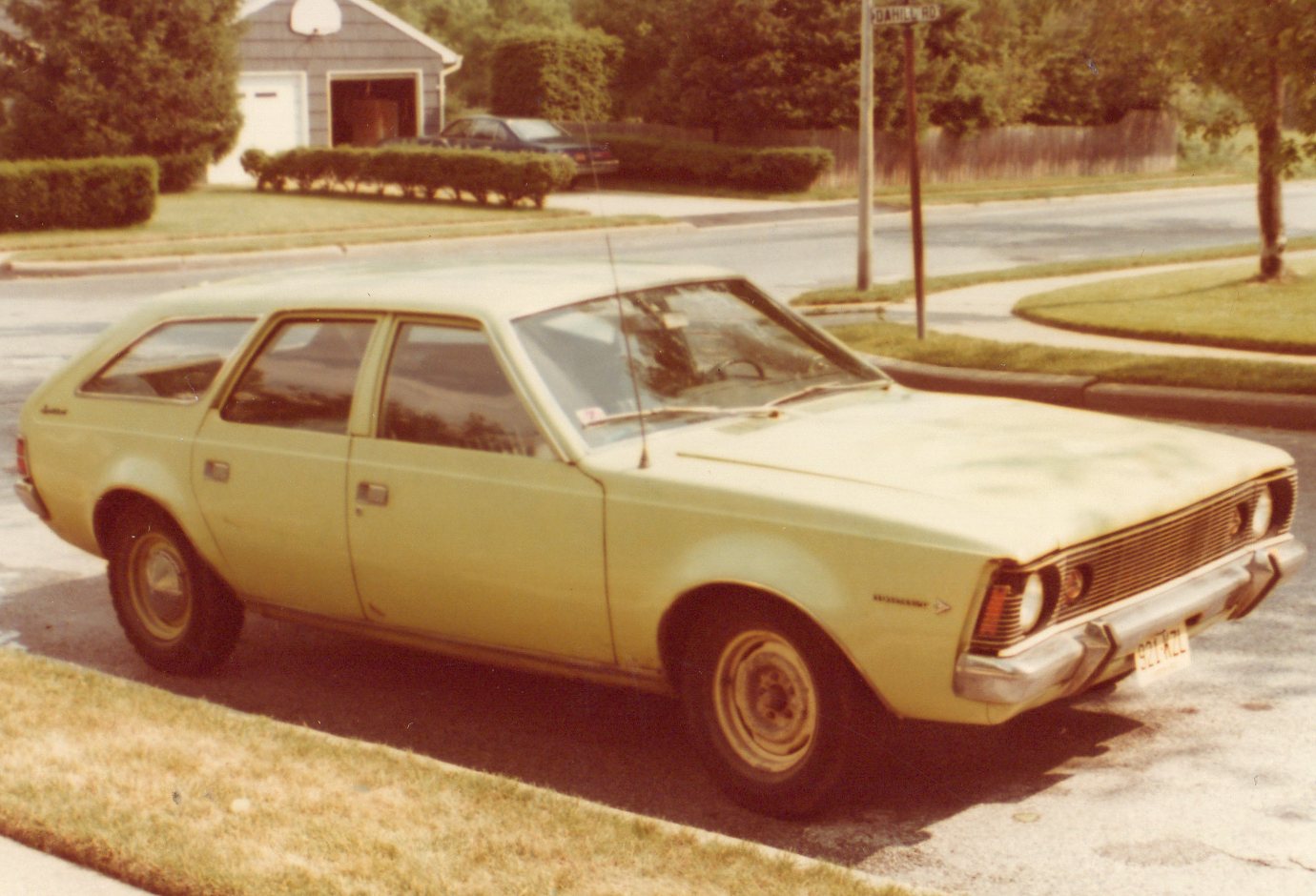
[After a lot of dithering about transportation for my job as a feature writer in 1979, I finally bought a rickety green AMC Hornet station wagon from a Princeton grad student for $500. I somehow got it registered in Trenton and drove out to Old Bethpage in Nassau County, where I lived with a Newsday librarian, Lillian Marx. We had a warm relationship that I remember fondly. At summer’s end, I surprised her with a copy of Sophie’s Choice, which she was eager to read.]


Section 5. The work as a clerk was at times frustrating, when the phones were ringing, the editors were yelling and the mail was stacked up by the boxes. But I had the feeling that I had really contributed to the operations. The other intern on the Nassau desk, where we were working at Newsday’s main office in Garden City, wrote three articles near the end of the summer, but I wrote none. It was not a requirement to write as a clerk, although of course it is fun to do so. It’s not your usual summer job, because of the pace and the intrinsic smallness of the individual jobs. The main benefit is the pay, and the chance to return as a reporter. I enjoyed being a clerk because it gave me the opportunity to see a big newspaper up close, and to meet the people involved in its operation. At times I thought the summer would have been better spent, in a professional sense, had I gotten a job writing at a paper, but the chance to return to Newsday and write was a powerful incentive. You don't have to apply for the second year, when the competition for positions is more intense.


A day in the life of an intern, sorting the mail.


There is a fair amount of frustration during the first week or two as a clerk because there are many individual tasks to be mastered. The mailboxes are only in an approximate order according to sections. Mail arrives for people who have long since left the paper, and it takes time to separate the current from past staffers. I was initially gun-shy around the phones, but with practice this disappears, as does nervousness around the forbidding VDT. I personally like the pace of the place, but everything is carried forth on a professional level, and people should realize that the work should be taken seriously.


Editor Howie Schneider and reporter Allison Mitchell, 1978


[Answering phones on the National Desk had its historic surprises. In 1978, Allen Weinstein published The Hiss-Chambers Case, which argued that Alger Hiss was, in fact, a Soviet spy. Newsday must have been covering the book’s assertions and this national replay of the early history of the Cold War, because one day I picked up the phone and had this conversation:


Me: Newsday national desk, how can I help you?


Caller: I’d like to speak with Arnold Abrams [I think that was the request. Abrams was a reporter on the high-profile National Desk near where I sat.]


Me: May I ask who is calling?


Caller: This is Alger Hiss.


Me: One moment please (puts caller on hold). Arnie, it’s Alger Hiss calling for you on line 1!


Arnie: Oh come on!


Me: No, really, it’s Alger Hiss!


Convinced by my youthful confidence, Arnie took the call. The rest is history.]


As a reporter, I was left to my own devices. Half of my articles were self-generated; that is, I would present my editor with ideas and he would indicate the ones he would like me to develop. This I would do, and after about a week of calls and writing I would submit the piece, which usually received fairly light editing, although this was only in my case. My articles were not written under deadline, unlike the cityside, as we say, reporters, so I can concentrate on thoroughness and “style” in a relaxed setting. Sometimes I was assigned articles. The work on the energy supplement was also assigned. Since this is essentially what I plan to do, in one form or another, with my professional life, I enjoyed it. The only part that bothered me was that none of my articles appeared until the fourth week. This is due, however, to the fact that Part II works on a long lead time and articles generally do not appear until about two weeks after they are submitted. 


Section 6. I always liked the working environment at Newsday, because you're really involved in keeping things going. The other clerks and writers and editors are, for the great majority, interesting, loquacious individuals who are quite helpful. I was sorry to leave my reporting job.


Section 7. As for supervisors, I spent most of my time last summer working with other clerks, rather than under the direction of the woman who had control over them, the secretary of the Nassau Editor. As a reporter, I had an editor to whom I sent my articles, and who would consult with me when he had questions about them. 


It was not an intense, day-to-day sort of professional relationship simply because I sent the stories in at wide intervals, and rarely needed direction when researching them. Mr. [Kevin] Lahart, once I had been around him for a week and became acclimated to the working environment, was a competent, friendly man who I came to like a great deal by summer’s end. Had I been a regular news reporter, circumstances might have been different, because I gravitate toward feature, rather than news, writing, and my stories might have needed heavier editing than they received in Part II. This, however, is speculation. 


[That summer of 1979 had plenty of news. I limited my driving due to the energy crisis. Near the end of my internship, Yankee catcher Thurman Munson was killed when his crashed his Cessna Citation while practicing landings at an airport in Ohio on August 2.


Meanwhile, I made energetic but fruitless efforts to create a social life. I recorded my misadventures in the essay "Fear and Loathing on the Long Island Singles Scene," which appeared in the Daily Princetonian on September 12, 1979 and was reprinted in my 2012 memoir, "A Kosher Dating Odyssey."


I did better hanging out with Larry, a Princeton classmate who was an intern reporter for Newsday in Queens. We saw the movie "The In-Laws" and heard The Tubes perform in Central Park, performing their classics "White Punks on Dope" and "Don't Touch Me There."]


Section 8. Other than getting approval for the initial assignment of a story, I was totally on my own in shaping the material. They could send it back and make me fiddle with the lead, as sometimes happened, but the essential work was mine, and I appreciated the freedom I was given, especially the freedom to follow up on my own story suggestions. The clerks have certain jobs they do as a matter of course, although sometimes editors will give them a job to do. They work under a different sort of freedom.


Section 9. As mentioned, three of my six articles were self-initiated, which editors like because it speaks of creativity aggressiveness, etc., etc. Even if eight of 10 article ideas are rejected, the two that click are all that you need to keep busy. story ideas are crucial in the business, because they bring individual experience and perception to the process, an editor might not have a story on an interesting topic simply because his or her ideas going directions apart from that idea through suggestions these blind spots are filled in also, Mr. Bookbinder request that all interns let him know what they think about the program when the summer ends, and this is a good way to have operation input into its operation.


Section 10. As a clerk I overcome came my essential hesitancy to do things with telephones. I never like to call people for stories, which can be a big stumbling block for a potential reporter. I got so I could leap right in, flip from line to line, hit the hold button like a pro and generally perform competently in the job. but since my life's ambition is hardly to be a receptionist, the skills that counted came during the summer as a reporter. I had been writing for newspapers for years, but never at this rarified a level, and with professional editors. It was not so much a matter of learning new skills, but of learning or discovering new attitudes toward my abilities, and finding that I do indeed have the ability to be a professional journalist or writer at a very high level of the profession. The clips and experience of having worked at the 10th largest paper in the country are of incalculable value, certainly more impressive than if I had continued to write for my hometown weekly, the Upper Valley Progress. The contacts I have made are also of great importance, plugging me right into the New York scene, or so I hope.


Section 11. For advice see the answer to the second and third questions applicants should act accordingly.


Section 12. My internship, as you might have guessed was highly successful. I was good enough and lucky enough to get an internship in my field of interest. Because they are available in a wide range of fields, with many types of requirements, I would urge people to try for them. Certainly the ones in journalism are the subject of hot competition by talented people. People should not make a few applications and then pray, because many talented writers get rejected. The trick is, however, to send out enough applications to get accepted someplace, given whatever pay and geographic limits you may place for yourself. not everybody can work at the Washington Post, for example, but small dailies often take college students, and weekly papers can be very helpful as the starting point. I began in my weekly, covering city council, features and other articles, although this was a permanent position rather than an internship. Such jobs provide the real thing: writing experience in real-life situations that, with dedication, hustle and talent, can be parlayed into much better situations.


This advice is general in nature, and would apply to students interested in working in government, medicine and any other field they might want to enter. Since I am knowledgeable on the subject of journalism internships, this advice definitely applies to this field. They can be either good or bad, depending on the amount of work you put into them--a cliched thought, perhaps, but applicable, anyway. They can give you valuable contacts, sometimes a good salary, and usually exposure to different situations and people than what you are accustomed to This might involve relocations for the summer (and in my case for this summer, the harrowing experience of buying my first used car) and exposure to a new environment, but this can be exhilarating in and of its own right. As for advice, I would recommend that people talk to students who have participated in the programs to get an idea of the requirements and types of work and also, if possible, to visit the work site. 


My AMC Hornet, American Iron of 1979.

The summer ended and I returned to Princeton and my spot as the Sports Features Editor of the Daily Princetonian. To my surprise, I got a job as a reporter-researcher at Forbes magazine in New York, starting a week after graduation. I moved to Brooklyn and donated the Hornet to Goodwill as soon as possible. I didn't have another car until I moved to Connecticut in 1991. My social opportunities increased to an acceptably intense level of highs and lows during my life in New York in the 1980s.

As a freelance writer in New York in the 1980s, I wrote an article for the Daily News on specialized business libraries after connecting with Brian Moss, a Newsday editor who had moved to the Daily News. Later, I wrote an article for Advertising Age about Newsday's highly talented team of illustrators, which lent the paper a stylish edge.

I left journalism after being laid off by a trade magazine publisher in July 1995. Still, I like to think blogging is a lot like journalism: I write what I want and add the illustrations. And, like journalism, it doesn't pay much.

I continue to look back on Newsday as a great experience and have all my clips.


Read all about it. 


Thursday, June 26, 2025

September of 1977: McAllen to Princeton by Bus

The Internet as we know it now did not exist in the 1970s. Had it, I'm sure I would have been a teen blogger with my essays. I recently unearthed an essay I wrote about a bus trip from McAllen, Texas to Princeton, New Jersey at the start of my sophomore year at Princeton. I wrote this travelogue a month later and I can't recall who I hoped would publish it. Here it is, with bracketed commentary written 48 years later to fill in details, along with photos I took on that long, strange trip. 

The self-styled king of the road shook himself from his cramped daze. St. Louis1:30 a.m., a Sunday in Septemberbled into the mages of other dormant city scenes. His pillow a crown and a camera his scepter, the royal disposition had been tiring since the Arkansas breakdown 12 hours earlier. 

Memorial Stadium, Austin, for football practice.


Sunday morning indeed; unshaven, the last shower lost in sweat and nutrition replaced by candy bars devoured in Springfield, Missouri. Four hours there; he spent his last change for a phone call to tell Kay he would be in St. Louis late. (Late? He never gave her a definite time of arrival.) 

[Kay was a Mission friend attending college in Illinois.]

Probably San Antonio. 


Time killed by scribbling notes in the back of a science-fiction novel: the men's room panhandler, a newspaper reread six times, the bus station's mute doyenne and her seizure at his feet. 

Now he was deposited in a new town. Did Kay get the message? One never knows about unnamed messengers. A glance through burning eyes revealed no familiar faces. So, he thought, x-more hours added to the 30 he had survived since leaving Austin Friday evening. In which case he needed a paper, some more candy, of course a picture in a mirror or "Hi, Van! Welcome to St. Louis." or . . . 

[I had visited my brother, a freshman at the University of Texas at Austin. His high-rise dorm, Jester, stunned me with its modernity, a contrast to the spare 19th century accommodations of Princeton's dorms.]


Waiting for bus repairs, Rogers, Arkansas Sept. 6

He could have cried on her neck. Instead, he smiled. After all, he was touching base again. 

That summer I could never fully explain, even to myself, why I wanted to take the bus from South Texas to central New Jersey. [I had spent the summer as a reporter-photographer of my hometown paper, the Upper Valley Progress. That summer marked the last time I ever lived in Mission.] Sitting in the McAllen, Texas, terminal at midnight, the only certainties were the ticket, the two weeks before classes began, a solitary personality suitable for bus travel and an understanding mother willing to lug trunks to the nearest UPS office. I nursed no urge to discover America à la Peter Fonda and Dennis Hopper, at least not consciously. The airlines would be faster, the dubious ones saidbut after a half-dozen flights east, the blue womb bored me. The speed and convenience were equaled only by the unreality and emotional jaggedness of the medium. 

Self-portrait in Rogers, Arkansas, Sept. 6


The sense of transformation was lost in the jump from one corner of the country to another. The endpoints of departure and arrival remained abrupt and unconnected. While hostesses proffered sodas, the fresh memories of home always struggled with plans for the academic months, with my mind as the battleground. In the efficient yet frosty air journeys I could never grasp the ripping force of what was happening. 

Which should not be a surprise, because nothing was happening. I became the animation that linked two sets of circumstances, nothing if not the Nietzschean rope between, pardon the metaphorical simplification, plant and phantom. 

Soon after leaving McAllen, this traveler sensed a change in the tempo of time. Reading was impossible and talk with strangers unappealing. How should one fill those enormous spaces of time between stopovers in Austin and Illinois before the final destination? The disruption of my normal day-night cycle suggested the need for a new mental process. Initially I pondered the recent. Summer incidents, though, quickly staled in the darkness. So the psychic construction began somewhere near Falfurrias. The end product, if ever there was one, did not hinge on analysis or the picky little manipulations that characterize the civil creature. 

Instead, I observed, felt experienced the sensation of travel. It was a new approach for one accustomed to constant thought. In my typical definition of usefulness, much of the trip was "wasted." I learned to look beneath the appearance of inaction and thus view myself as a personality and body in flux, a more dynamic notion that that of an intellect in suspended animation. I joined the other people traveling by busand felt a rare oneness with them. The endless miles smoothed the transition between home and college with empty strips of time that demanded no artificial calendar slots. The future could develop at its own leisure, rather than be thrust into consciousness before the vacation lost its intensity. 

Twenty-four hours before St. Louis, during a Dallas layover, I was first touched by the pulse of the slow travel, which shapes fascinating patterns from the utterly mundane. 

[The trip from Dallas to St. Louis took even longer than expected after the bus broke down in Rogers, Arkansas. On the upside, the bus passed through Muskogee, Oklahoma, which thrilled me because I knew all about the town thanks to Merle Haggard classic 1969 song "Okie From Muskogee."]

I felt tired, rumpled. A hodge-podge of personal belongings surrounded my seat, never leaving my sight, rarely my touch. The shifting juncture of different fates and lives came to exhilarate There the strangers waited and ignored each other, all unknowns somehow bound to each other by the shared movement.

That bind, tenuous and universal, affects me more than the sterile hustle of any airport. 

2 a.m., Sept. 8, Columbus, Ohio, still awake.


Air travel always unfolded like a row of dominosget on the plane, fly, arrive, change, repeat, grab luggage and get to campus. Very nice, rather dull. I will admit that the unexpected at 30,000 feet can be at least disturbing, occasionally fatal. Given my light attitude, I found bus lapses amusing and enlightening. I studied the streets of Rogers, Arkansas, from the main intersection and felt quite at ease. I knew my destination even if I lacked information as to my precise location and time of arrival. 

In Pittsburgh, I discovered that schedules are written by people who can err. Sorry, the man said (remarkably cheerful at 6 a.m.), no morning buses to Philadelphia. So it took me another three hours to filter through New York City. Stoicism ruled when three was added to the 60 preceding it. 

Stopovers with friends and relatives provided more than decent food and a soft bed. For me, they became touchstone to stability and the past. Thus, the presence of the familiar, even in a vague form, adds special meaning to arrivals and departures. The sight of Kay, a true deus ex machina, revived thoughts of ourselves as two different people years before. 

But a more haunting and symbolic familiarity is preserved on the first picture I took during the trip. I will never even know their names. My own family left the station long before the bus did. I did find surrogates to watch the vehicle pull away, pull me away. The picture of them loses some natural drama through the distance between that knot of working-class Chicanos and the camera. Yet their expressions mirror their thoughts, however deeply they submerge the details. 

Sullen stares toward the bus door mark the faces of the old man and his wife; they look lost, as if someone precious was leaving again, lost into the night. The younger woman, -perhaps their daughter, seems almost wistfuldoes she remember something about the traveler? Departures always do that. Their emotions I find recognizable, maybe because I have often caused them. For every

The journey begins: Midnight in McAllen, Texas


[The essay ends at this point; it must be missing pages. This final section describing the McAllen bus station comes at the very beginning of the journey. I finally arrived in Princeton, where I lived in a six-man suite in the 1938 Dorm, now demolished.]

Sunday, April 27, 2025

Relocation Anxiety Update

April wasn’t the cruelest month but it was one marked by a high level of stress for me. After living with my partner Naomi for 10 years in her home in Westchester County, N.Y., we relocated to a condo we bought together in a Boston suburb.

The downsizing and packing began after we bought the place in December. At the end we had 200 tightly taped containers, ranging in size from shoeboxes to weighty trunks, each bearing color-coded location labels and notations on the contents ("books" was especially popular).

Before the movers delivered everything in mid-April, my tendency to let the bats fly out of my belfry intensified as I worried about lurking disasters. We used Noah’s Ark Moving and Storage, which I had hired four times before as I bounced around Fairfield County, Connecticut and to Westchester County. These guys know their stuff and did an estimate based on a video walkthrough of the house. Still, the more we packed, the more I fretted that the 26-foot truck wouldn’t hold everything. I had zero evidence for this beyond my fevered imagination. Maybe we would need a gigantic 18-wheeler? Should we arrange a back-up plan for local storage? I was spinning like a top.

Letting go

Finally, I decided to take the 12-step approach: Let go and let God, or, in this case, let go and let Noah. End result: what looked like an enormous collection filled about half the truck. I moved on a Monday with medicated-to-the-gills cats Jerry and Basil, then on Tuesday the movers hauled boxes and furniture into the condo. Naomi arrived on Wednesday and the serious settling in began. New furniture arrived on Thursday and the rooms took shape.

Delivery done, I needed something new on which to obsess. Where were my atorvastatin pills to control high cholesterol? I know I packed them, I could visualize them in the little sack from CVS. My supply was running low and I had to find them. I tore through boxes for my office and, bathroom cabinet supplies and checked boxes before I flattened them. Did I lose them in the car? I found lots of socks, toothpaste and floss but no atorvastatin.

Every box I ripped open was like a medical version of Cracker Jacks. When would I find the pharmaceutical prize? Naomi suggested it might be in the last box I packed, as I was keeping the medicine out—so I wouldn’t misplace it. With my pill supply shrinking by the day, I dug through boxes like a fox terrier. Finally, slicing packing tape with a letter opener, I opened a shoebox and inside found mostly religious items: a Torah volume, a book of Psalms, yamulkes—and the precious container of atorvastatin. The roller coaster of anxiety slid to a stop, or to be more emotionally accurate, a pause.


Cancel culture in the condo

What’s next on the relocation anxiety agenda? The condo comes pimped out with GE appliances—fridge, washer/dryer, microwave, dishwasher. A few mornings ago the washer suddenly lurched to life, rumbling and flashing the phrased “CANCELLED.” I frantically pushed the power button and that didn’t turn it off. The owners’ manual didn’t tell me anything. Even though the water didn’t come on, I still had visions of a biblical flood. I rapidly searched for  “GE washer gives a ‘cancelled’ message.” Well, this is a common problem with some GE washers, although it usually happens when the machine is washing. After a few minutes the message vanishes. That’s what happened.

So this sent me to Reddit and the Better Business Bureau. There I found comments that made my hair stand on end. Could those horror stories of unfixable machines and baffled repairmen apply to our new environment, here in the house of GE? Do I dare use the dishwasher of doom?

The washer kicked on again in the same way. I’ll ask around the condo if anybody else has had this mysterious occurrence. My exhausting quest for problems faded, for now. Maybe I’ll just let go and see what happens. Every day brings a different challenge but, based on experience, I somehow cope.

Down and out at the RMV

In fact, no sooner did I feel relaxed than another "lost" episode began. Naomi and went to the nearby Register of Motor Vehicles to switch to Massachusetts plates and licenses. We had gathered all the necessary paperwork, including insurance coverage from a new carrier. When we finally reached a representative behind a bank teller-like clear partition, Naomi's paperwork sailed through and she got her Bay State plates. The representative shook her head at my auto title; it showed a major bank as a lien holder. I couldn't register the car and get a title if the car had a lien against it.

"But I paid that loan off years ago," I bleated. I could register but the title would be sent to the bank to certify the lien had been cleared. She said I should have got a letter from the bank at the point where I paid the auto loan off.

My stomach fell down to the sub-basement of the RMV building. I would have put the letter in a bulging car folder that held repair bills and other paperwork. But I couldn't remember seeing the folder when I was packing. When had I last seen it? It had been in a two-level file cabinet under my home office desk. I would have stored that with important folders.

Back home, I relived the atorvastatin routine, ripping open boxes to find this sizeable folder. Nothing. I plunged into a garage storage area. I had parked plenty of folders in the trunks, tied with twine to keep them together, but no car folder. I checked every trunk and box twice. I found literary output going back 40-50 years, evidence of obsessive self-chronicling, so that was all fun to find about totally useless at the RMV.

My sense that I had misplaced or lost the folder in the months before the move became terribly real. I couldn't put that unsettling sense of absence out of mind. Digging through the trunks and boxes, I could picture the folder's former location and even found folders I kept in the same drawer. Thee folder would no doubt have had the lien release letter and it had dropped off the face of the earth. 

I called the dealership where I bought my car and had it serviced and spoke with a woman who sounded familiar with the issue of the lost lien letter. She said somebody from the finance department would call me back. While that gave me a sliver of hope, I still woke up at 4 a.m. wondering what would happen next.

I called the dealership back the next morning and learned it no longer dealt with the major bank that held the lien and didn't have anybody I could call. The best she could do was direct me to the New York State DMV to get a new title. That was another dead end because I needed to produce the lien letter.

Next step: I called the bank, which I imagined as a forbidding bureaucracy that would brush off my little problem. An online search turned up a title department, so I called the number and soon was talking to an angel in human form who listened empathetically and looked up my account. I had indeed paid off the loan balance off on April 29, 2019--exactly six years before my call. We both chuckled over that. She said the lien release letter had gone out then and I could get either a copy or a new version. Since the RMV clerk said I had to provide a "wet" version, a letter actually signed, I told her I needed a fresh one. That would take a week or so, then another week for the mailing. I asked about expediting the delivery, could they just charge the fee to my bank credit card?

That wasn't an option but I could give them a UPS or FedEx account number and they could send it that way. By day's end I signed up with UPS. 

So, while I can't say the episode is over until I get the wet letter and dash down to the RMV, I do feel immensely relieved. Later that day I had a "how'd we do" email from the bank and I gave the representative all 10's for her "empathetic, confident and highly informed guidance." Credit where credit's due, I say.

The search for the lost folder continues. The notion that I threw it away while packing makes zero sense. It may be gone or it may be in some nook or cranny I have yet to uncover. 

Is this the last lost episode of the 2025 relocation season? I can't predict anything. I thought the atorvastatin hunt was bad enough, but this was much more serious. 

These regrettable but common cycles remind me of the joke about the Jewish telegram: “Start worrying. Details to follow.”

Sunday, March 02, 2025

The Roots of Obsession

Next month I’ll be leaving Katonah for a Boston suburb, moving from a house to a condo. Besides a lot of books, I’m bringing personal papers: journals, clips from my journalism days, letters, research files. I’m obsessed with what I call self-chronicling.

This enthusiasm began with a little booklet with envelopes for grades 1-12, called “School Days: Records and Memories.” My mother bought this when I started at William Jennings Bryan Elementary School in Mission, Texas.

The first grade envelope shows a photo of me looking rumpled and dazed with a bump on my head. I must have walked into a tree. The envelope includes my report card, a Red Cross card certifying me as a beginner in swimming, two stapled pages with an explanation of my score on the Metropolitan Achievement Test, and a photo of my teacher and me taken on my birthday.

As the years rolled by, the envelopes thickened with achievement tests, honor roll listings, photos, event programs. Envelopes started tearing out of the booklet, so from the 7th grade on I stuffed the ephemera into manilla envelopes.

Why did I save so much, and still keep it? The older I got the more I depended on academic achievement as a keystone of my identity. The honor rolls and certificates validated me since, otherwise, as I felt like an outsider. My self-image was fragile; I wrote my height and weight on the 5th grade envelope: 60 inches tall, weight 110-115, with the note “Gosh I’m heavy (I don’t look it).” Have I ever not felt that way? Still, journaling captured my emerging sense of living in history.

A turning point came in the 6th grade, spring of 1970. Students wrote an autobiography. I did so by putting pages in a green binder with metal tabs to hold the pages together. That fall I moved to junior high. I had wanted to start a journal and now I saw how. I added pages to the autobiography and wrote my first entry on September 15, 1970. In parallel to the ongoing journal, I saved whatever struck my fancy over the decades: report cards, notes stuck into my locker, a ticket stub from a Dallas Cowboys game, every issue of the newspapers and magazines where I had an article, every letter from my mother and other relatives, with carbon copies of letters I typed to them. Newspapers from presidential elections and events like 9/11. A folder of bad job reviews, now those make for fun reading. Morning-after notes and cards from stormy 1980s romances.

I lugged this pile around from Texas to Brooklyn to Connecticut to Katonah. Fearing I would soon be auditioning for “Hoarders,” I began shrinking the stack a year ago knowing we’d eventually move. I donated hometown newspapers to the Mission Historical Museum, sold or gave away 80 percent of my record collection, sold posters from the Soviet Union. I even donated coffee mugs celebrating George Bush’s 2001 inauguration, gifts from a Texas friend.

Anyway, the accumulation mostly stopped in the 1990s. No more vinyl albums, no more journalism clips, digital photos replaced prints. I stopped buying newspapers covering historic events; email made letters obsolete. My book interests are so specific (Judaism and the Soviet Union) that I rarely buy anything. The people to whom I wrote letters died. 

I’m still thinking of “why.” The chronicling since the 1960s constantly informs my creative output. while I jettison the bulkiest materials (all those back issues of Advertising Age, Video Store and the Princeton Alumni Weekly!), I will always keep the most personal collections. Letters to and from Mom and her sister Charlotte in Tyler, Texas were a weekly report of our lives. And I think about future generations. I didn’t know much about my parents or grandparents, but I’m creating a way for people of the 22nd century to know something of my life and times. The unending chronicles show how I see history as it happened. I’ve already planned to donate trunks and binders bursting with millions of words to Princeton or the Mission Historical Museum and let the librarians decide what it means.

Best of all, I don’t have to remember anything since I recorded the big moments and saved letters and emails. I’ll never run short of material.  


Poetic Thoughts, January 28, 1975

I was looking through a folder of poetry and stories from high school and I found this, written 51 years ago today. My Friend, the Proton th...